
Skip to content
Software development

SaaS development

Launch and scale subscription software with multi-tenant architecture, billing and analytics done right.

Typical budgetfrom $20,000· 2–4 months
  • Free 30-minute consultation
  • NDA before any details
  • Reply within 1 business day
What you get

You want to turn an idea or an internal tool into a product people subscribe to. You get SaaS with sign-up, billing and teams built in, on foundations that hold up when bigger customers start asking questions.

Building SaaS means building a business: onboarding, subscriptions, permissions, analytics and infrastructure that serves many customers from one platform.

We help founders and product teams launch SaaS products quickly and evolve them confidently — with architecture that supports growth from your first customer to your thousandth.

This is for you if you…

  • want to launch or relaunch a subscription product
  • need billing, plans and team accounts that just work
  • are selling, or plan to sell, to larger companies
  • want an architecture that won't need a rewrite
What we offer

What we can do for you

Every project is different, but these are the pieces we combine most often.

01

SaaS MVPs

A focused first version to win early customers and validate pricing.

02

Multi-tenant architecture

Secure data isolation and per-tenant configuration.

03

Subscriptions & billing

Plans, trials, invoices and usage-based billing with Stripe or Paddle.

04

Admin & customer dashboards

Tools for your team and self-service for your customers.

05

Integrations & public APIs

Webhooks, APIs and marketplace apps that extend your reach.

06

Product analytics

Understand activation, retention and feature usage.

Pricing

What a SaaS product costs

Typical budgets by scope, so you can plan before we talk. After a free 30-minute call you get an exact quote in writing, before any work starts.

SaaS MVP

$20,000 – $45,000

2–4 months

  • Sign-up, onboarding and subscriptions
  • Your core feature, done properly
  • Admin panel and product analytics

Best for: Founders launching their first paid plan

Growing SaaS

$45,000 – $100,000

4–8 months

  • Teams, roles and usage-based billing
  • Integrations and a public API
  • Audit logs and customer data export

Best for: Products with paying customers

Enterprise-ready

from $100,000

Phased

  • Single sign-on and user provisioning
  • Data residency and compliance groundwork
  • Uptime, scale and security reviews

Best for: SaaS moving up-market

Prices in USD, excluding taxes. They're typical ranges, not offers: your price depends on scope and is agreed in writing. Not sure which fits? See how we price.

Get your exact quote
Before we build

Decisions we'll make together

These choices shape the cost, the timeline and how the product works for years. We talk them through with you in plain English before any code is written.

  1. 01

    How will you charge?

    Per seat, per usage or flat tiers: the pricing model shapes the database, the billing integration and the upgrade flow, so we decide it early, not after launch.

  2. 02

    Shared database or one per customer?

    A shared database is cheaper and simpler; separate ones suit customers with strict data rules. We pick the right isolation for the customers you're targeting.

  3. 03

    What will enterprise buyers ask for?

    Single sign-on, audit logs, data export and security questionnaires come up in every larger deal. We leave room for them so you don't rebuild later.

Benefits

Why invest in SaaS development

  1. 01

    Faster time to revenue

    Proven SaaS building blocks get you selling sooner.

  2. 02

    Built to scale

    Infrastructure and data models ready for growth.

  3. 03

    Enterprise-ready

    SSO, roles, audit logs and the security features larger clients expect.

  4. 04

    A data-driven roadmap

    Analytics that show what to build next.

Process

How a project with us runs

Clear steps, a demo every week, and no surprises on the invoice.

  1. 01

    1–2 weeks

    Discovery & planning

    Requirements, architecture and a detailed estimate with milestones.

  2. 02

    2–4 weeks

    UX/UI design

    User flows, prototypes and a UI kit validated before development begins.

  3. 03

    2-week sprints

    Agile development

    Working software every sprint, with demos, code review and automated tests.

  4. 04

    1–2 weeks

    QA & launch

    Manual and automated testing across devices, then a monitored production release.

  5. 05

    Ongoing

    Support & growth

    Maintenance, monitoring and new features as your product grows.

Technologies

The tech stack we use, and why

Proven tools chosen for your product, team and budget, not whatever is trending this month. Here's what each one does for you.

Frontend

  • ReactThe most widely used library for interactive interfaces.
  • Next.jsReact framework with fast, search-friendly server rendering.

Backend & APIs

  • Node.jsJavaScript on the server: fast APIs and real-time features.
  • NestJSStructured Node.js framework for large, maintainable backends.
  • Auth0Managed login, social sign-in and single sign-on.

Data & storage

  • PostgreSQLReliable, powerful database for most business applications.
  • RedisIn-memory store for caching, queues and real-time features.

Cloud & DevOps

  • KubernetesRuns and scales many containerised services automatically.
  • AWSThe largest cloud platform, with services for almost anything.

Commerce, content & business tools

  • StripePayments, subscriptions and invoicing.
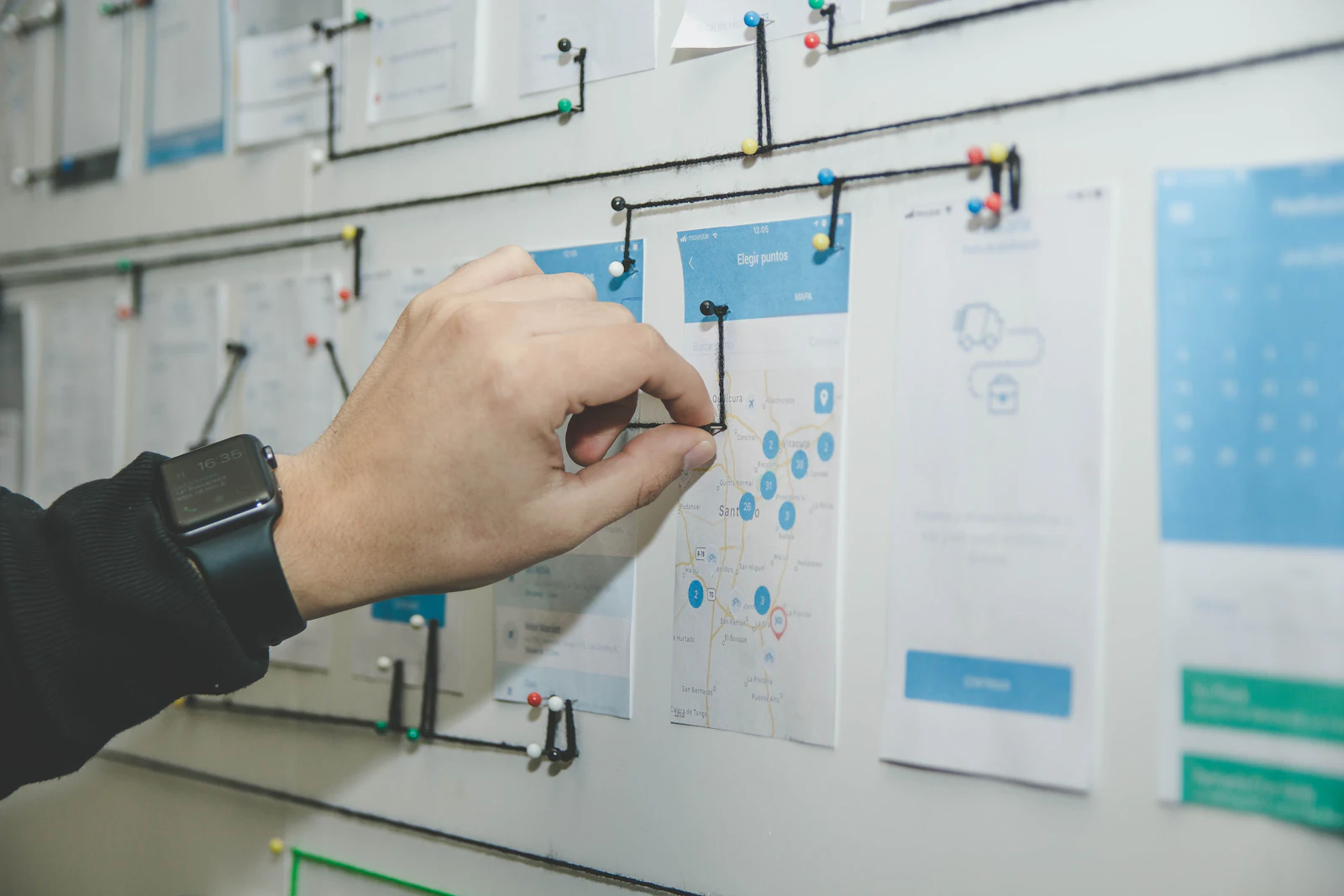
Pinning app screens to a planning wall
Hand sketching app wireframes on paper
The people behind the work

You'll work with people, not a ticket system.

From the first call to launch day, you talk directly to the designers and engineers building your product. Same faces, same team. No hand-offs to strangers halfway through.

  • One team from the first call to launch day
  • A demo every week that you can click through yourself
  • Plain language, clear estimates and no surprise invoices
  • Honest advice, even when it means a smaller project

“If something isn't worth building, we'll tell you. If something goes wrong, you'll hear it from us first.”

— the VavenSoft team

Meet us on a callFree 30-minute consultation · NDA before any details
Our work

Recent work

Projects we've designed and built, and what changed for the people using them.

Case studyFintech · crypto tradingPythonFastAPIdYdXStripeWebSockets

An AI trading assistant run by a team of specialist agents

NovaSignal

A multi-agent trading platform: AI agents read the market, a risk agent signs off every trade, and orders run on dYdX.

  • Live in production at app.novasignal.io
  • Hard limits on every trade: stop loss, daily loss cap, drawdown cap and a kill switch
  • Every agent decision written to a journal users can review
  • More than 900 automated tests guarding the trading logic
Discuss a similar project
Sample projectLogisticsReactGoGoogle Cloud

Operations dashboard

Live orders, revenue and delivery performance in one place for the ops team.

Typical timeline
6–10 weeks typical
Team
3 people
Plan something like this
FAQ

SaaS development: your questions

Straight answers to what people ask us first: cost, time, ownership and the details that matter. Anything else? Just ask.

How much does a SaaS product cost?

It depends on scope. Typical budgets: SaaS MVP, $20,000 – $45,000; Growing SaaS, $45,000 – $100,000; Enterprise-ready, from $100,000. After a free 30-minute call you get an exact quote in writing, before any work starts.

How long does a SaaS product take?

SaaS MVP: 2–4 months. Growing SaaS: 4–8 months. Enterprise-ready: Phased. You'll see working results in a demo every week, and the proposal includes a timeline with milestones.

Should we start with an MVP?

Usually, yes. An MVP with the core workflow, sign-up and billing lets you validate demand and pricing before investing in advanced features.

How do you handle multi-tenancy?

We choose the right isolation model for your needs — a shared database with tenant scoping, separate schemas or separate databases — balancing security, cost and complexity.

Can you add AI features to our SaaS?

Yes. Many SaaS products now include AI copilots, summaries or automation. We design these features with usage limits and cost tracking per tenant.

Can you set up Stripe or Paddle billing?

Yes: subscriptions, trials, coupons, usage-based billing, invoices and tax handling, plus the customer portal for upgrades and cancellations.

When do we need SOC 2 or ISO 27001?

Usually when larger customers start asking for it. We build with the required practices from the start so certification later is mostly paperwork, not re-engineering.

Who owns the result?

You do. You own the code, designs and documentation once invoices are paid, so you're never locked in to us. Code lives in your own repository from day one.